

KLDSCOPE LAB // FIELD GUIDE 001
THE METAL IS YOURS NOW.
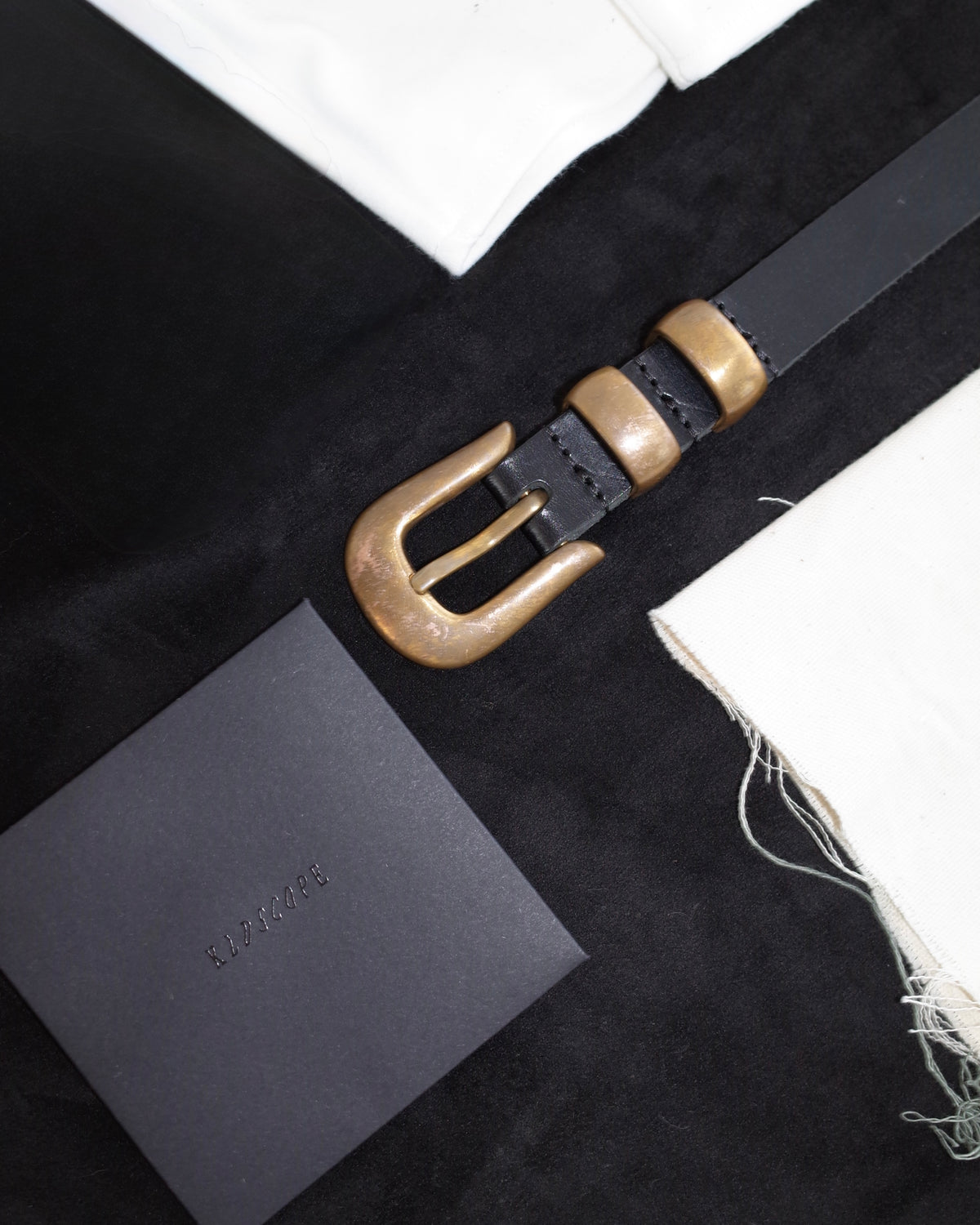
Unlacquered brass does not hold one colour. It responds to touch, air, moisture, storage, and time.
We prepared your JOEY by hand before dispatch. Its tone may already have shifted by the time it reaches you. Fingerprints, darkening, lighter contact points, and variation between components are all expected.
You can leave the surface to develop, or occasionally bring back some of its brightness. Both are valid. The important part is knowing which action changes the metal—and which action may mark the leather.
FREE THE METAL
IF YOU ONLY REMEMBER FOUR THINGS.
01 // USE THE ENCLOSED CLOTH DRY.
It contains no polishing compound. Use it only to remove fingerprints and dust, and for routine wiping.
02 // KEEP THE LEATHER DRY.
Do not soak the belt or let liquid collect around the hardware and stitching.
03 // NEVER APPLY POLISH DIRECTLY TO THE BELT.
If you choose to polish, apply a very small amount to a separate cloth first.
04 // DO NOT CHASE A PERFECT MATCH.
The buckle, two keepers, and tip will respond at different rates. That is normal.
TWO WAYS TO LIVE WITH IT.
Polishing is mildly abrasive and gradually removes surface material. Avoid repeated or aggressive polishing.
01 // LET IT DEVELOP.
This is the simplest—and most natural—approach. Wipe the hardware lightly with the enclosed dry cloth when fingerprints or dust bother you. Otherwise, leave it alone. No polishing schedule and no original shade to preserve.
Areas touched most often may become brighter. Recessed areas may become darker. Each component will find its own pace.
02// BRING BACK SOME BRIGHTNESS.
Polishing removes part of the patina. It does not stop the brass from changing again.
Treat it as an occasional reset, not routine maintenance. Work slowly, protect the leather, and stop when the surface is clean enough—not when every component looks identical.

DAILY CARE // NO COMPOUND REQUIRED.
For regular care, use only the enclosed dry fibre cloth. Hold the leather away from the area you are wiping, then pass the cloth over the metal with light pressure.
The cloth will remove loose dust, fresh fingerprints, and some surface marks. It will not remove established patina—and it is not meant to.
DO
- Keep the cloth dry and free of polish residue.
- Store the belt in a dry, ventilated place.
- Let the belt dry naturally if it is exposed to humidity.
DO NOT
- Do not soak the belt.
- Do not use abrasive pads or scouring cloths.
- Do not use alcohol, bleach, vinegar, lemon, baking soda, or household cleaners on the assembled belt.
- Do not apply leather conditioner over the metal.
OPTIONAL // NOT ROUTINE CARE
Only continue if you are comfortable removing part of the patina. The exact dispatch-day finish cannot be guaranteed, and the brass will begin changing again after polishing.
01 // PROTECT THE LEATHER.
Work on a clean, flat surface. Protect the leather immediately around the component with low-tack masking tape made for delicate surfaces. Test the tape on a hidden area of the leather first. Remove it promptly after polishing.

02 // APPLY POLISH TO A SEPARATE CLOTH.
Use a clean, soft white cotton cloth that is separate from the enclosed daily-care cloth. Place a very small amount of brass-compatible metal polish on the cloth—never directly on the assembled belt.
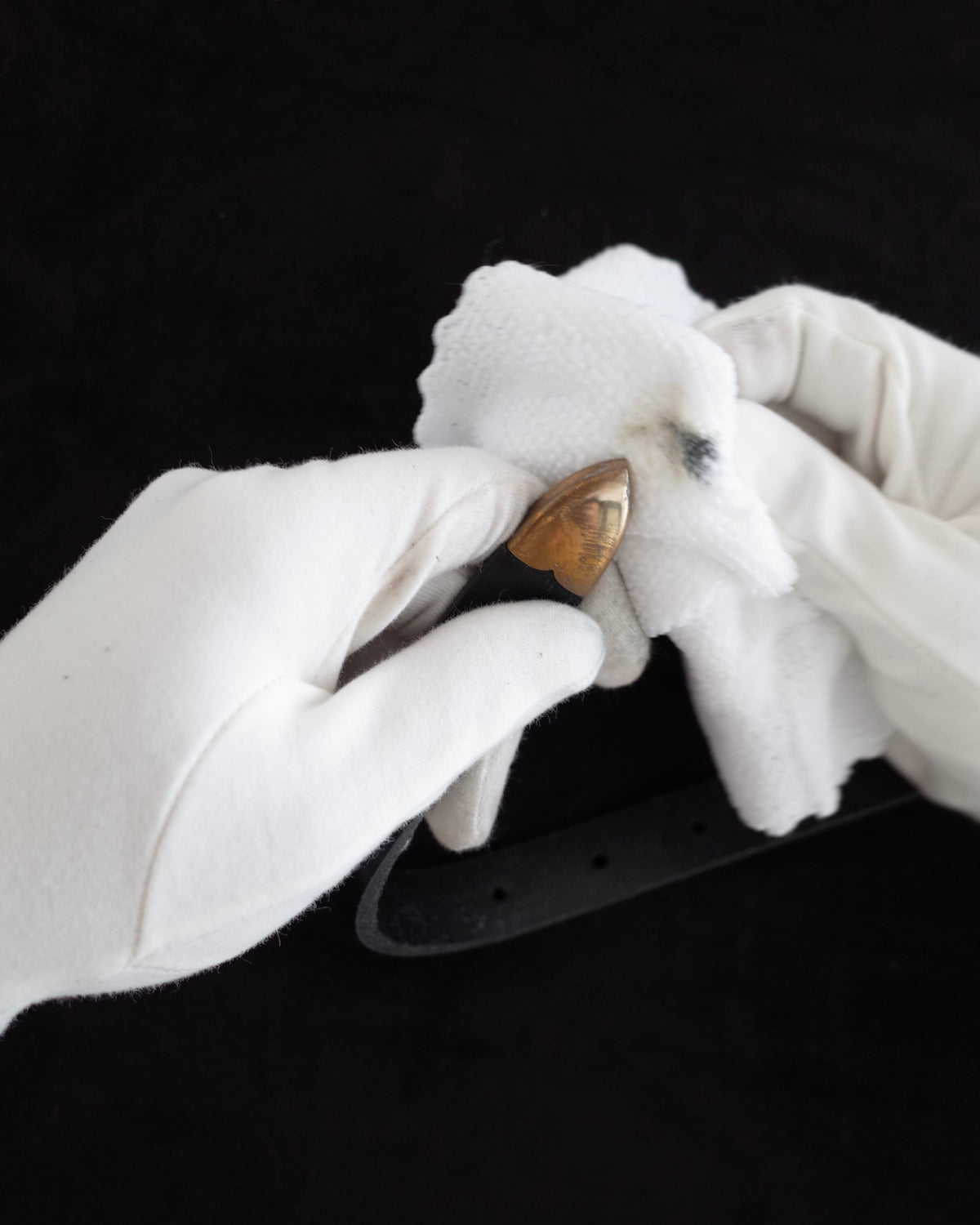
03 // WORK ONE COMPONENT AT A TIME.
Rub gently with small, controlled movements. Keep the product away from leather, stitching, and narrow gaps where residue may collect. Check the surface often. Once you reach a brightness level you like, use a clean section of the cloth to buff the hardware until it is dry and free of residue. Do not over-polish to force a match.
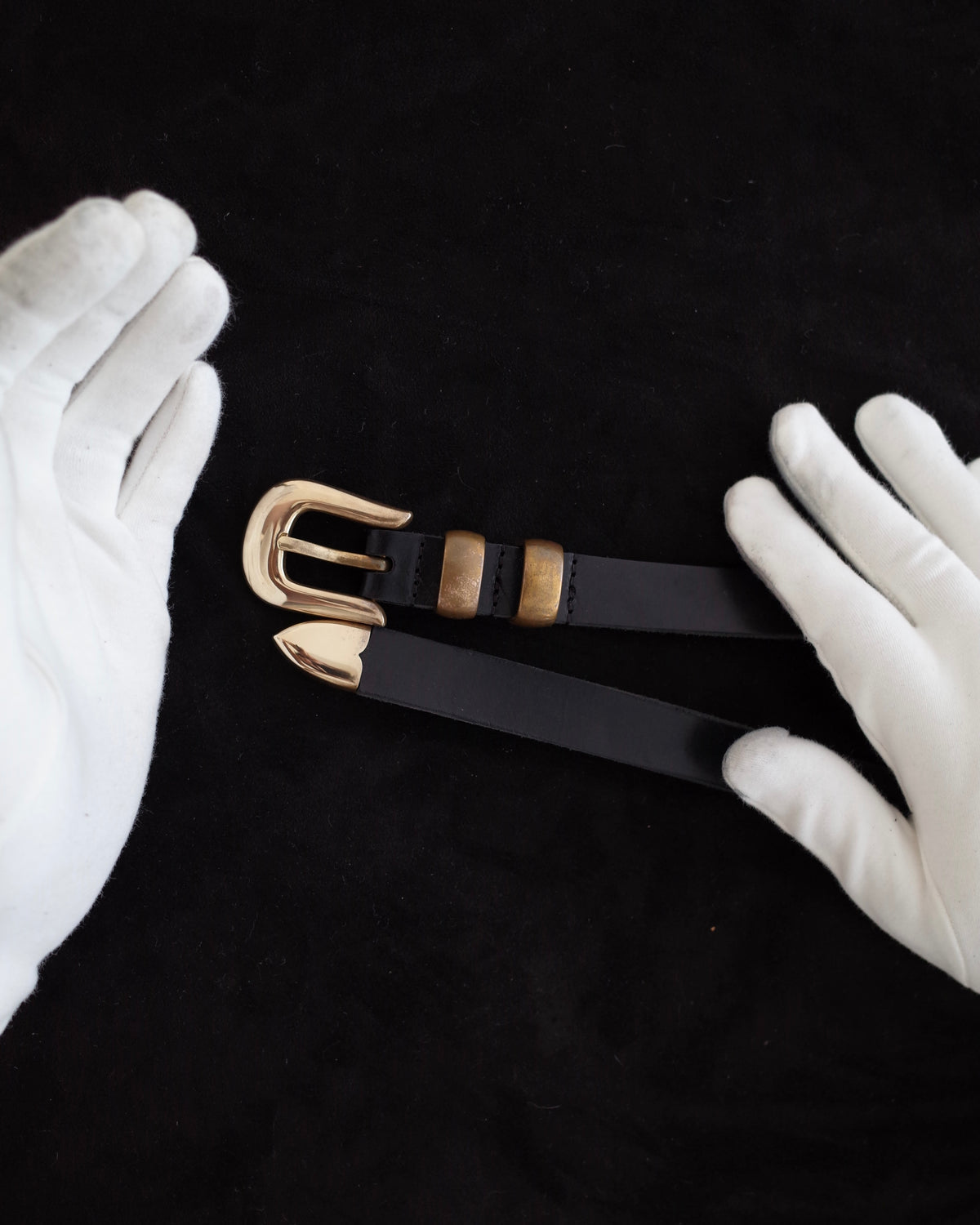
04 // RESET WHAT YOU WANT. KEEP WHAT YOU LIKE.
The buckle and tip shown here were polished. The two keepers were left untouched.
If one component or area develops a tone or mark you no longer want, polish only that area and start again. Leave the patina you like where it is.
The metal will continue to change from there.
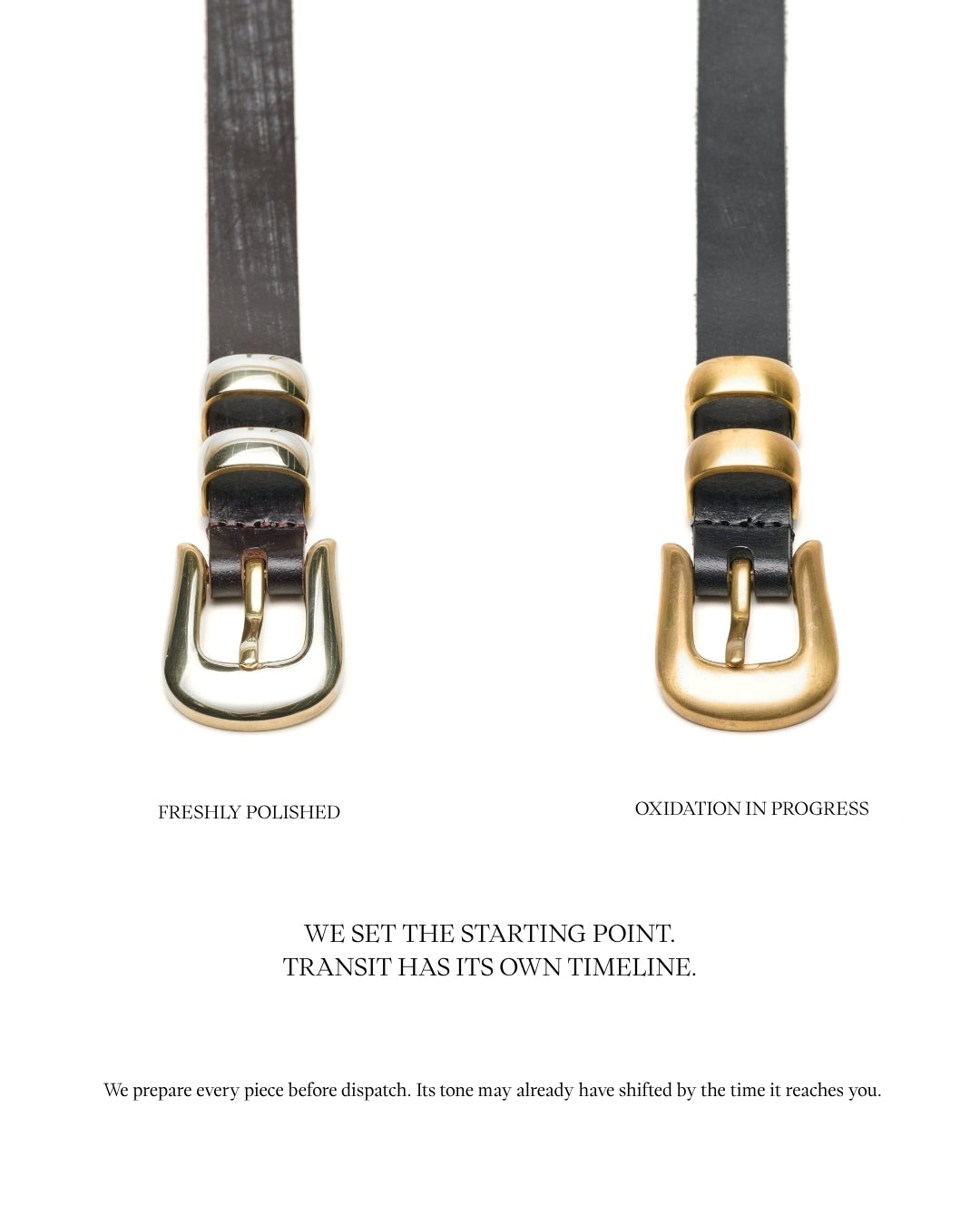
POLISHING IS NOT A PAUSE BUTTON
A brighter surface is another starting point, not a permanent finish.
The brass may begin changing immediately. Fingerprints can return. The areas you touch may brighten while recessed areas darken. The buckle, two keepers, and tip may separate in tone again.
Nothing has gone wrong. The metal is exposed, and the process has resumed.
WE SET THE STARTING POINT.
THE REST IS YOURS.
Need help?
BRASS CARE FAQ
Not always. We prepare the hardware by hand before dispatch, but unlacquered brass responds immediately to air, humidity, handling, storage, and transit.
Your hardware may arrive brighter, warmer, darker, or somewhere between the states shown on the product page. This is expected.
There is no required schedule. If you like how the brass is developing, leave it alone and use the enclosed dry cloth for routine wiping.
If you prefer a brighter surface, polish only when you want to reset a particular tone or mark. Treat polishing as an occasional choice, not routine maintenance.
No. The buckle, two keepers, and tip differ in shape, exposure, and frequency of contact. Each component will develop at its own rate.
You can restore some brightness, but we can't guarantee the exact original tone or mirror level.
Polishing creates another starting point. Once exposed again, the brass will continue to respond to touch, air, and time.
Because the brass is unsealed, a small amount of green residue may occasionally appear where brass meets leather.
If it does, gently lift it away with a soft, dry brush, then wipe the hardware with a clean, dry cloth. Do not use water or household cleaners.
KLDSCOPE LAB // EXPERIMENT 001
THEY TOLD US TO SEAL IT. WE CHOSE TO FREE IT.
Care does not mean stopping the metal from changing. It means deciding how much of that change you want to keep.
*If you have any questions, do not hesitate to contact us at info@klds.co